

Future of Contactless Dining in 2025
In an era where a Google search is the new storefront window, relying solely on third-party delivery apps and social media profiles is like renting a billboard instead of owning prime real estate. While platforms like Zomato, Swiggy, and Instagram are valuable for discovery, they ultimately control your customer relationships, data, and branding. A custom website for your restaurant is not a luxury; it's the cornerstone of your digital identity and the most powerful tool to grow restaurant business online. It's your owned asset, your 24/7 salesperson, and the command center for your entire restaurant marketing strategy 2025.
A custom website goes far beyond a basic online presence. It's a strategic hub that integrates your online ordering for restaurants system, showcases your brand story, captures valuable customer data, and directly drives revenue without commission fees. For restaurant owners, cafe managers, and cloud kitchens, investing in a professional website is the first step toward building a sustainable, profitable, and independent digital business.
The Critical Advantages of a Custom Restaurant Website
Your website is the only platform where you have complete control over the user experience, branding, and data. This control translates into significant business advantages that third-party platforms cannot offer.
1. Own Your Customer Relationships and Data
Third-party platforms own the customer data. When someone orders through an aggregator, you get a name and an order, but you cannot market to them directly. Your custom website allows you to build a owned email and SMS list. You can track customer behavior, order history, and preferences, enabling personalized marketing that dramatically increases your repeat purchase rate. This direct line to your customers is invaluable for promoting new menus, special events, and loyalty programs.
2. Maximize Profitability by Eliminating Commission Fees
Aggregator commissions can range from 15% to 30% per order, drastically cutting into your already thin margins. Direct orders through your website eliminate these fees. Even a modest shift of 20-30% of your online orders to your direct channel can result in a substantial increase in net profit. Promoting your direct ordering through your QR code food menu and social media is crucial for driving this profitable traffic.
3. Build a Cohesive and Authentic Brand Story
Your website is the perfect canvas to tell your unique story. Showcase high-quality photos of your food and ambiance, introduce your chef and team, and share the inspiration behind your menu. This depth of storytelling builds an emotional connection with potential guests, something that a standardized aggregator listing cannot achieve. A strong brand story justifies premium pricing and fosters customer loyalty.
4. Become the Hub of Your Digital Ecosystem
Your website should be the central command center that connects all your digital solutions for food business. It's where you can:
- Integrate your direct food ordering system.
- Link your live restaurant QR menu.
- Promote your WhatsApp ordering system.
- Showcase positive reviews and testimonials.
- Manage table reservations seamlessly.
- Blog about your festival marketing for food brands initiatives.
Essential Features of a High-Converting Restaurant Website
A successful restaurant website is designed for speed, clarity, and conversion. Every element should guide the visitor toward placing an order, making a reservation, or visiting your location.
1. Mobile-First, Lightning-Fast Design
Over 70% of customers will browse your menu on their phone. Your website must be optimized for mobile devices with fast loading times, easy navigation, and thumb-friendly buttons. A slow or clunky mobile experience will instantly drive potential customers back to aggregator apps.
2. Integrated Online Ordering and Payment
The path to ordering must be frictionless. Your online ordering for restaurants system should be built directly into the website, not linked out to a third-party site. Offer multiple payment options, including credit/debit cards, net banking, UPI, and cash on delivery, to cater to all preferences.
3. A Dynamic, Visually Stunning Menu
Your digital menu should be the star of the show. Use high-resolution images, clear descriptions, and filters for categories (veg/non-veg, bestsellers, etc.). For dine-in guests, prominently display your QR code food menu to encourage scanning and direct ordering from the table.
4. Clear Calls-to-Action (CTAs)
Every page should have a clear primary goal. Use bold, contrasting buttons with action-oriented text like "Order Food Now," "Book a Table," or "View Our Menu." The color of these buttons should stand out, using your accent color like #563d7c to draw attention.
5. SEO Optimization for Local Discovery
Your website is your most powerful tool for local SEO for restaurants. Optimize your site with relevant keywords, your location, and your menu to rank higher in Google searches for terms like "best pizza in [your city]" or "cafe near me." This drives highly qualified, free traffic to your site.
A Case Study in Digital Independence
A cloud kitchen specializing in North Indian cuisine was relying entirely on aggregators, paying 25% commission on every order. They decided to invest in a custom website with integrated ordering. They promoted the direct ordering link on their social media, via their delivery drivers (with package inserts), and through a small discount incentive for first-time direct orders.
Within three months, direct orders through their website accounted for 35% of their total online sales. This shift alone increased their net profit by over 8%. Furthermore, by capturing customer emails and phone numbers through the website, they launched a simple SMS campaign for a monsoon promotion, which achieved a 15% redemption rate. They now use their website as the primary platform for testing new dishes and gathering direct feedback, making it the true engine of their growth.
Your Restaurant Website Implementation Checklist
- Secure a Memorable Domain Name: Choose a name that reflects your restaurant and is easy to spell.
- Choose a Reliable Hosting Provider: Ensure fast loading speeds and high uptime for your region.
- Design for Mobile First: Over 70% of your traffic will come from mobile devices.
- Integrate a Direct Ordering System: Choose a food ordering system that seamlessly blends into your site.
- Implement a Live Chat/WhatsApp Button: Make it easy for customers to ask questions and order.
- Optimize for Local SEO: Include your location, menu, and keywords throughout your site.
- Promote Your Website Everywhere: Add the URL to your social bios, Google Business Profile, packaging, and QR menus.
- Install Analytics: Use Google Analytics to track traffic, conversions, and customer behavior.
Conclusion: Your Website is Your Digital Home
In the digital age, your restaurant's website is more than a brochure—it's your most valuable business asset. It's the only place where you control the narrative, the customer experience, and the profits. While third-party platforms are important for discovery, your custom website is where you build lasting relationships and sustainable revenue. It is the foundation upon which all other restaurant marketing strategy 2025 efforts are built. Don't just be a tenant on someone else's platform; build and own your digital home.
Stop paying commissions and start building equity in your own brand. Invest in a custom website today.
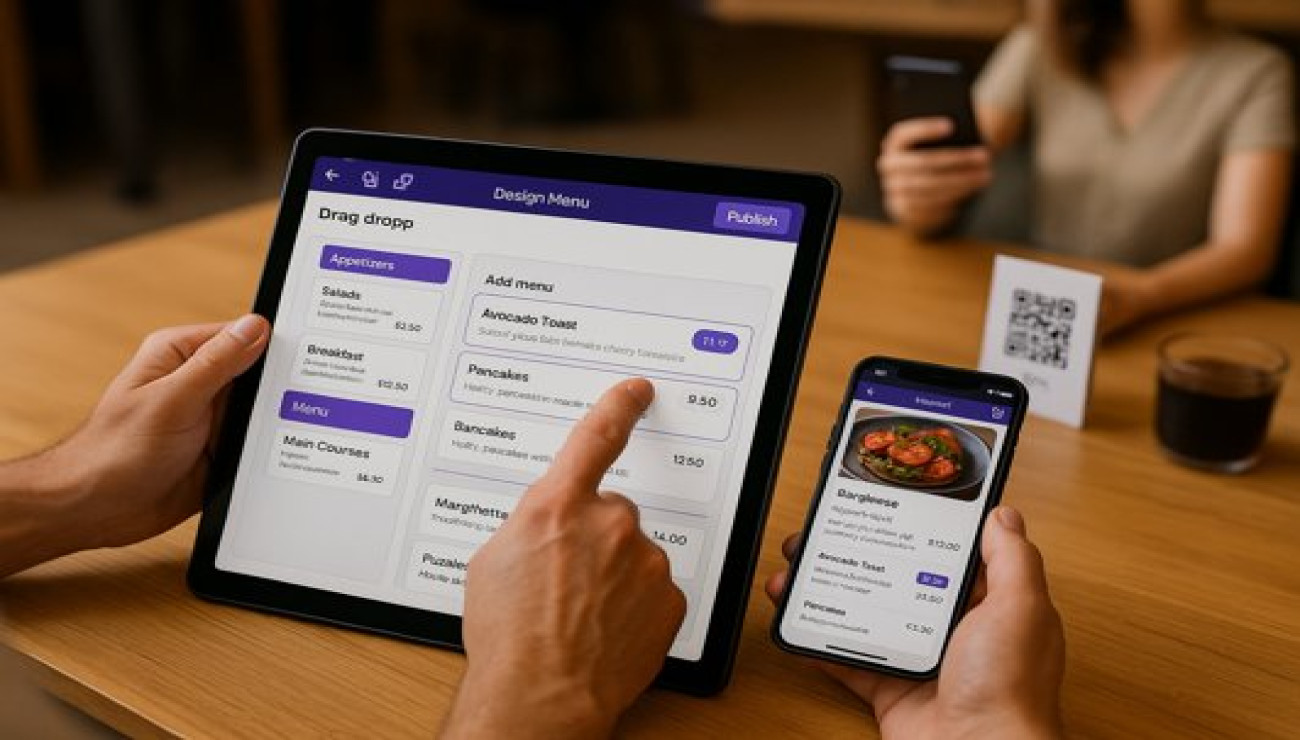
The global pandemic accelerated the adoption of contactless technology in restaurants, but what began as a safety measure is rapidly evolving into the new standard for dining efficiency, customer experience, and operational intelligence. The future of contactless dining in 2025 is not just about removing physical menus—it's about a fully integrated, hyper-personalized, and seamlessly automated guest journey. This transformation is powered by a sophisticated stack of restaurant automation tools and dine-in tech that will redefine how restaurants operate and compete.
textBy 2025, contactless dining will be the default expectation, not a novelty. It will encompass everything from AI-driven personalized menus and integrated WhatsApp ordering system to advanced table ordering solution and automated kitchens. For forward-thinking restaurant owners, this isn't just about keeping up with trends; it's about leveraging technology to reduce costs, increase ticket averages, gather invaluable data, and future-proof their business in an increasingly digital landscape.
The 2025 Contactless Dining Ecosystem: Beyond QR Menus
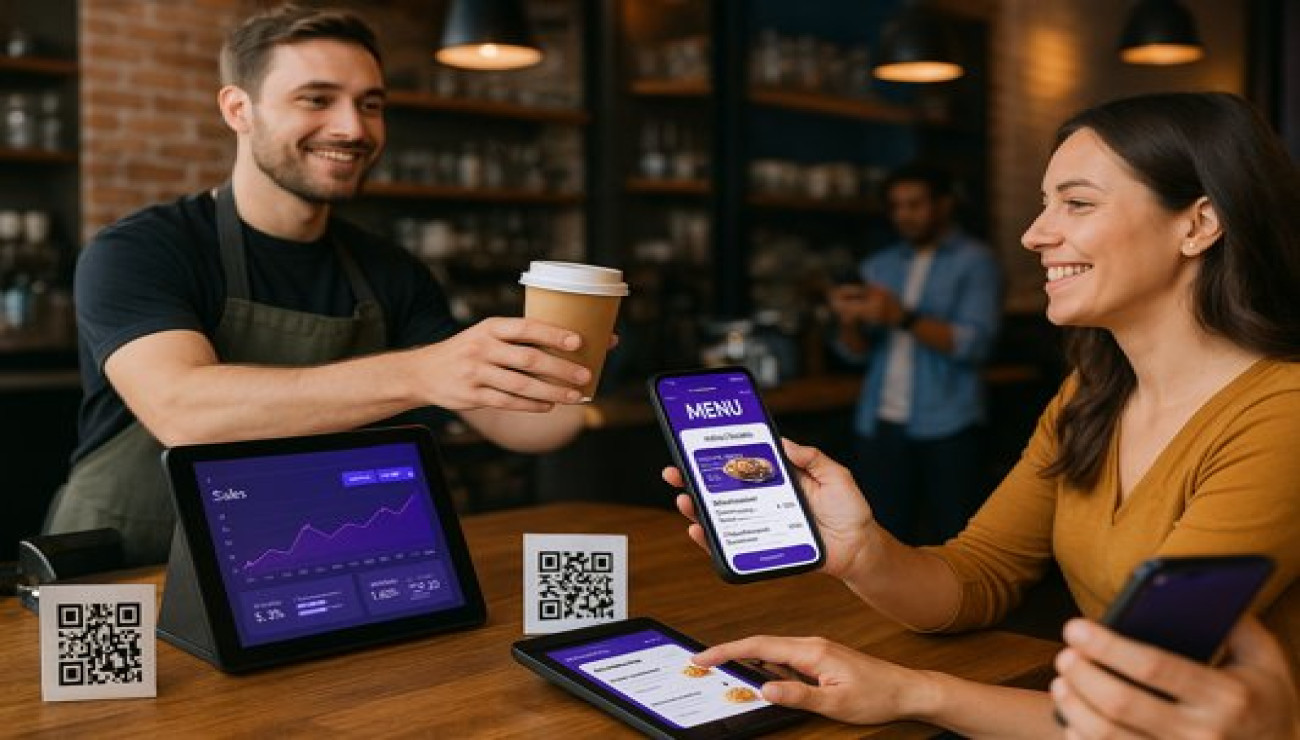
The next generation of contactless dining moves far beyond static PDF menus accessed via a QR code. It will be a dynamic, intelligent ecosystem that anticipates guest needs and streamlines every touchpoint.
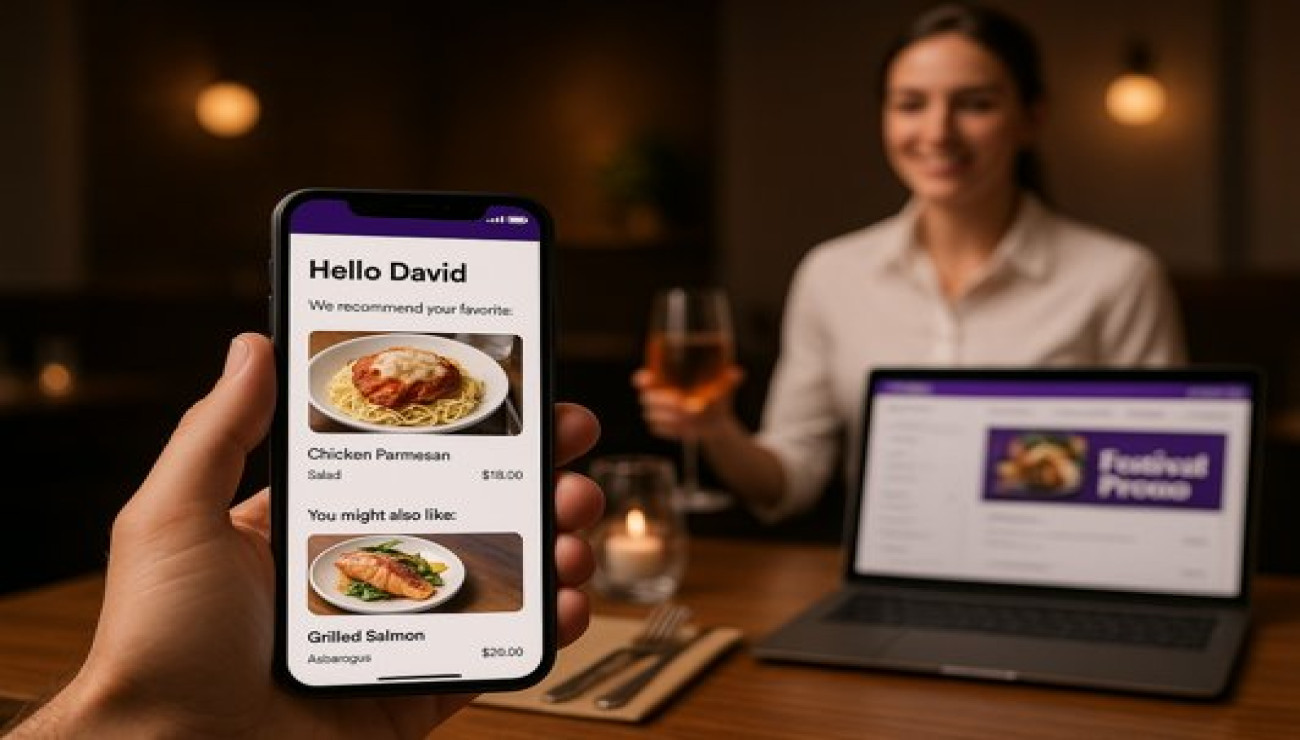
1. Hyper-Personalized Digital Experiences
Your restaurant QR menu will become a smart, adaptive interface. When a repeat customer scans the code, the system will recognize them (with consent) and personalize the experience:
- Welcome them by name and highlight their favorite dishes or previously ordered items.
- Suggest new menu items based on their past preferences, increasing upsell opportunities.
- Apply their loyalty points or available discounts automatically at checkout.
- Offer language preferences automatically, making multi-language digital menus a seamless standard.
2. The Rise of Integrated Conversational Ordering
Ordering will become more conversational and integrated into platforms guests already use. The WhatsApp ordering system will evolve into a central hub where guests can:
- Receive a personalized digital menu link directly in WhatsApp upon arrival.
- Place their entire order through chat, asking questions and getting recommendations in real-time.
- Request refills, ask for the bill, and split payments without ever flagging down a server.
3. Advanced Table and Kiosk Ordering Systems
Dedicated table ordering solution will become more affordable and widespread. We'll see:
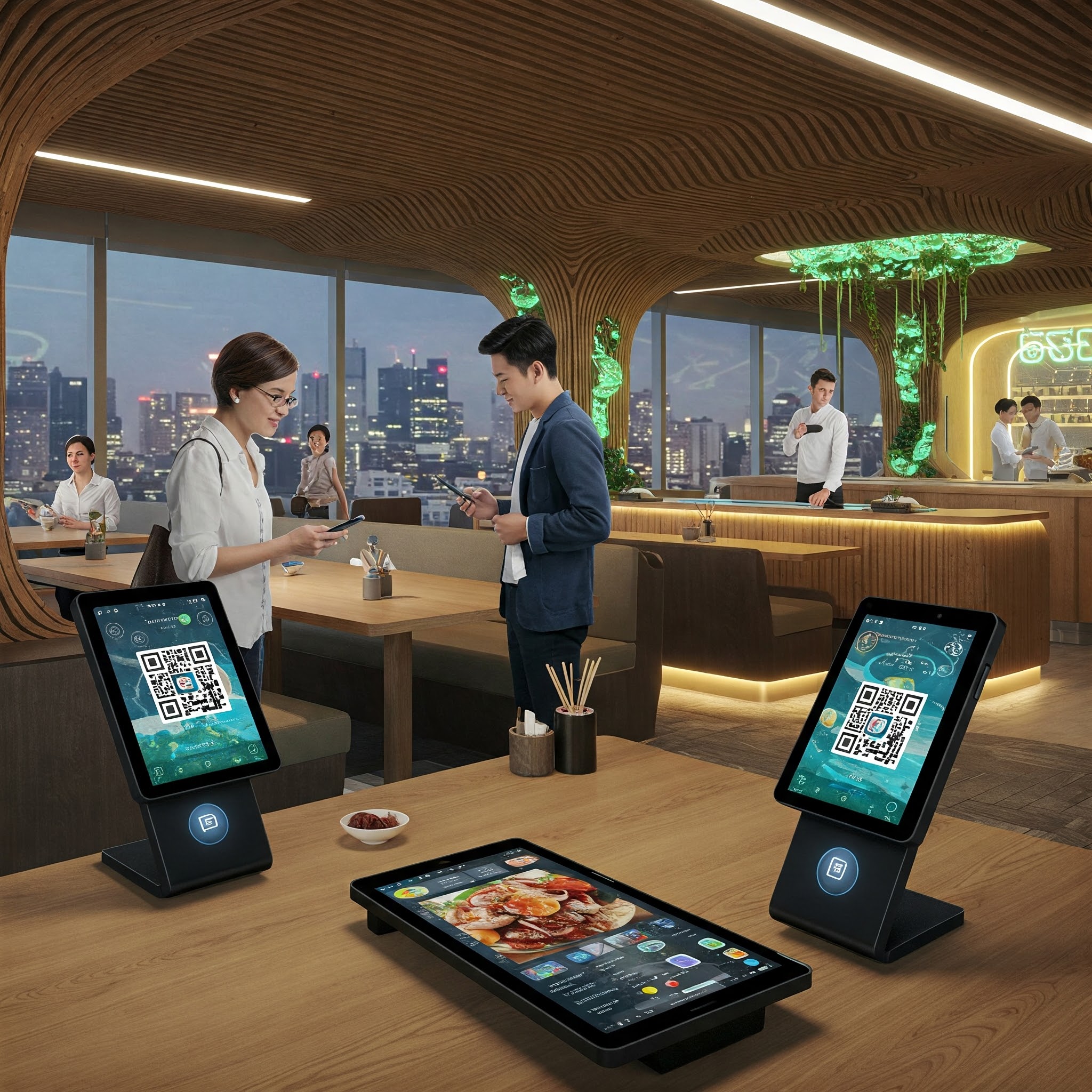
- Compact tablets or sleek interactive displays at every table, allowing guests to browse high-resolution images, watch short videos of dish preparation, and place orders at their own pace.
- Integrated games or entertainment for families to enjoy while waiting, improving perceived wait times.
- Seamless integration with the kitchen display system (KDS) to optimize firing times and improve table turnaround time.
4. Frictionless and Secure Payment Options
The end of the meal will be completely automated. Guests will be able to:
- Pay directly from their personalized digital menu or table device.
- Split the bill item-by-item with other diners at the table with a few taps.
- Use a variety of methods, from UPI and mobile wallets to NFC tap-to-pay, all without handing over a physical card.
The Operational Backend: Smart POS and Automation
The guest-facing magic is powered by a robust backend of integrated restaurant automation tools.
The Central Role of the Smart POS
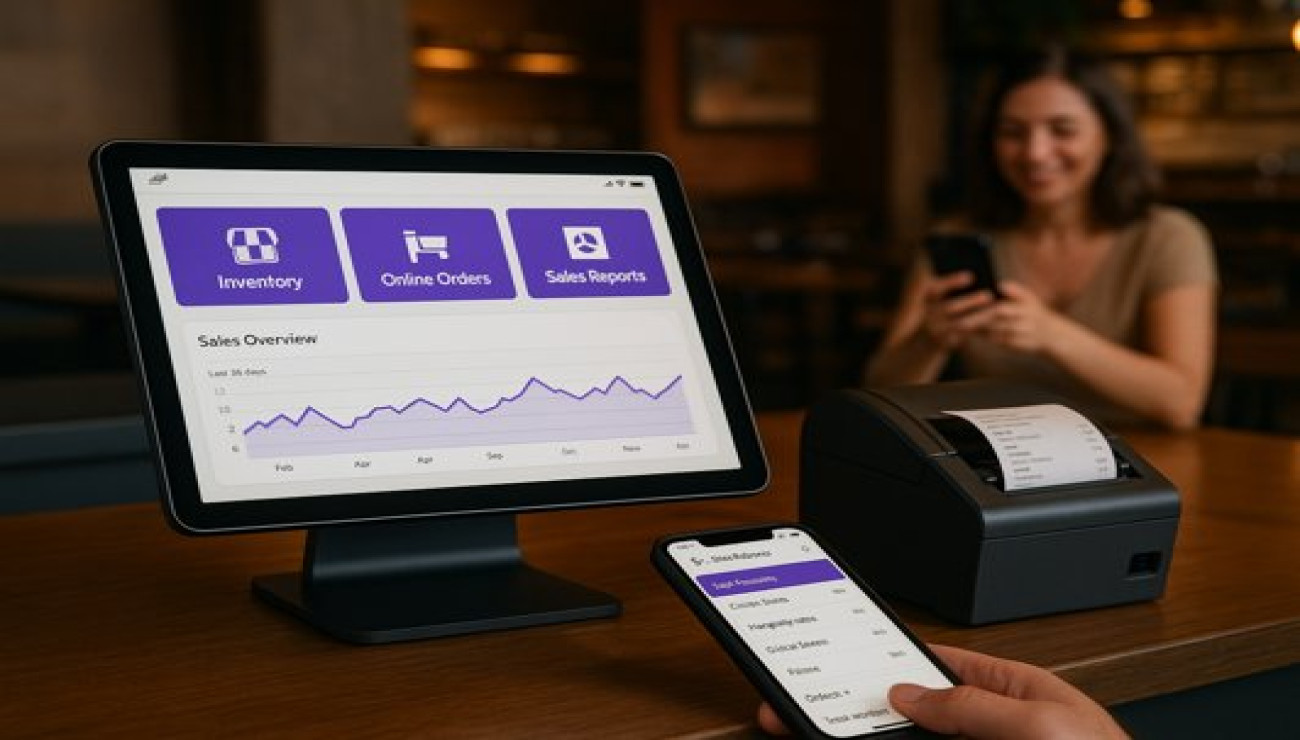
The POS software for restaurants will act as the brain of the entire operation. A modern smart POS for small eateries will seamlessly connect every component:
- Orders from QR codes, WhatsApp, and table tablets flow directly into the same kitchen queue.
- Inventory is automatically deducted in real-time across all ordering channels.
- Customer data and order history are synchronized into a unified profile.
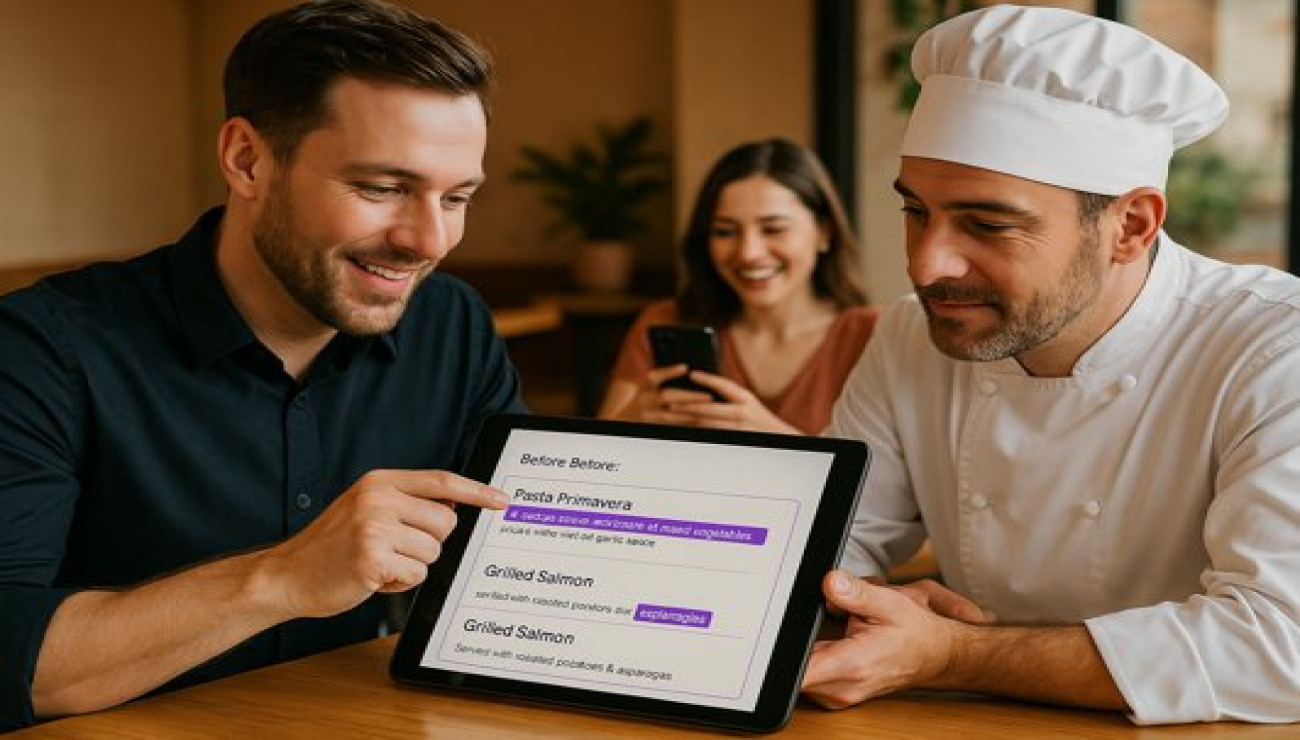
- Dynamic menu management allows for real-time updates on availability and pricing.
Predictive Analytics and AI
AI will move from a buzzword to a practical tool. Systems will analyze historical data to:
- Predict busy periods and suggest optimal staff scheduling.
- Forecast ingredient demand to reduce waste and optimize inventory orders.
- Identify menu trends and suggest items to promote or phase out.
A Case Study: The Contactless Restaurant of 2025
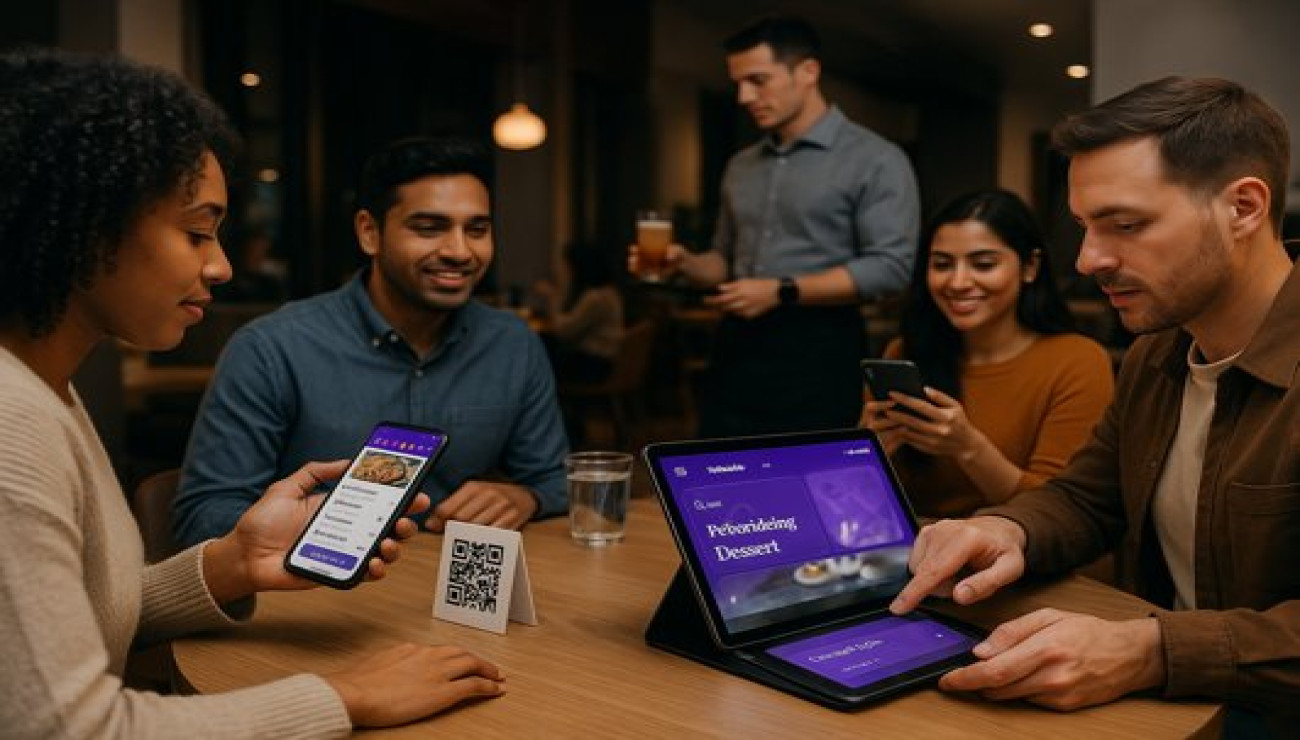
Imagine a casual dining restaurant in 2025. A group of guests arrives and is seated. They scan the QR code on the table. A first-time visitor sees a beautifully designed menu with highlighted bestsellers. A repeat customer is greeted by name and shown a "Welcome back!" offer for their favorite appetizer.
They place their order through the interface, which is instantly routed to the kitchen. One guest has a nut allergy, and the system automatically flags their chosen dish to the kitchen staff to ensure preparation safety. During the meal, a guest wants another drink; they use the "Request Service" button on their phone. A server arrives moments later with the exact drink, alerted by a discreet notification on their smartwatch.
When done, the bill appears automatically on their personal devices. They split it evenly and pay using UPI. The entire experience is seamless, personalized, and efficient. The restaurant benefits from higher order accuracy, a 20% improvement in table turnaround time during peak hours, and a wealth of data to personalize future marketing and menu planning.
Preparing for 2025: A Contactless Implementation Checklist
- Audit Your Tech Stack: Ensure your current POS software has open APIs and can integrate with new contactless solutions.
- Start with a Dynamic QR Menu: Implement a sophisticated QR code food menu system, not just a PDF link.
- Explore Conversational Commerce: Set up a basic WhatsApp ordering system for takeaway and queries.
- Prioritize Data Collection: Start building a customer database with consent to enable future personalization.
- Integrate Payment Systems: Offer and promote multiple frictionless payment options.
- Train Your Staff: Redeploy servers as hospitality ambassadors focused on service, not order-taking.
- Promote Your Tech: Market your contactless features as a benefit of speed, accuracy, and safety.
- Plan for Phased Upgrades: Budget for and research upcoming dine-in tech like table tablets for future implementation.
Conclusion: Embracing the Inevitable Shift
The future of contactless dining is not about removing human interaction; it's about elevating it. By automating transactional tasks like ordering and payment, staff are freed to focus on what truly matters: providing genuine hospitality, expert recommendations, and creating memorable experiences. The restaurants that thrive in 2025 will be those that view technology not as a cost, but as a strategic investment in efficiency, customer loyalty, and data-driven growth. The contactless revolution is here to stay, and it promises a future that is faster, smarter, and more personalized for everyone at the table.
The future of dining is contactless, connected, and customer-centric. Start building your ecosystem today.

Comments (0)